Things You Must Know Before Buying a Ceramic Coating
Ceramic coating has become one of the most talked-about vehicle protection solutions on the market — and in San Diego, where vehicles face relentless UV exposure, coastal salt air, and year-round sunshine, the interest is especially high. Walk through any upscale neighborhood in La Jolla, Coronado, or Rancho Santa Fe and you'll find no shortage of immaculately maintained vehicles wearing a professional ceramic coating.
But ceramic coating is also one of the most misunderstood products in the automotive protection space. Aggressive marketing has led many drivers to believe it's a near-magical solution that makes vehicles bulletproof and maintenance-free. The reality is more nuanced — and understanding it will help you make a smarter investment decision.
This guide covers everything you need to know before committing to a ceramic coating in San Diego: what it actually does, what it doesn't do, how it compares to wax and PPF, what drives the cost, and why the quality of installation matters more than most people realize.
What Is a Ceramic Coating?
Ceramic coating — also referred to as nano-ceramic coating or glass coating — is a liquid polymer that chemically bonds to a vehicle's factory clear coat when applied correctly. Unlike traditional waxes or paint sealants that sit on top of the paint surface, ceramic coating integrates with the clear coat at a molecular level, forming a rigid, semi-permanent protective layer.
The primary ingredient in most ceramic coatings is silicon dioxide (SiO₂), which creates an extremely hard, hydrophobic surface once cured. Some premium formulations also include titanium dioxide (TiO₂) for additional UV resistance or additional polymers that enhance flexibility and self-cleaning properties.
The result is a surface that repels water and contaminants far more effectively than bare paint, resists light chemical etching, provides meaningful UV protection, and maintains a dramatically enhanced gloss — all without needing to be reapplied every few weeks like wax.
Ceramic Coating vs. Wax vs. Sealant — At a Glance
| Feature | Wax | Sealant | Ceramic Coating |
|---|---|---|---|
| Durability | 4–8 weeks | 3–6 months | 3–7 years |
| Hardness | Soft | Medium | 9H (glass-like) |
| Hydrophobic | Moderate | Good | Excellent |
| UV Protection | Minimal | Moderate | Strong |
| Chemical Resistance | Low | Moderate | High |
| Gloss Enhancement | Good | Good | Outstanding |
| Application | DIY easy | DIY moderate | Professional |
How Does Ceramic Coating Work?
When a ceramic coating is applied to a properly prepared paint surface, its liquid polymer molecules fill in the microscopic pores and imperfections in the clear coat and then cross-link chemically as they cure. The resulting layer is significantly harder than the original clear coat and exhibits several key protective properties:
Hydrophobic Repellency
Water beads tightly and sheets off the surface, carrying away loose dirt and contaminants with it. This dramatically reduces the time water — and the minerals dissolved in it — sits in contact with the paint.
UV Radiation Resistance
The ceramic layer absorbs and disperses UV-A and UV-B radiation before it reaches the clear coat and paint layers beneath. In San Diego's high-UV environment, this protection is particularly meaningful for preventing paint oxidation and color fading.
Chemical Resistance
Ceramic coatings resist light acids and alkalis — including bird droppings, industrial fallout, and mild chemical contaminants — more effectively than bare paint or wax-protected surfaces.
Gloss Amplification
The smooth, rigid surface created by the coating reflects light more uniformly than factory clear coat, producing a deeper, more liquid-looking gloss that is immediately visible to the eye.
Benefits of Ceramic Coating
Superior Gloss and Shine
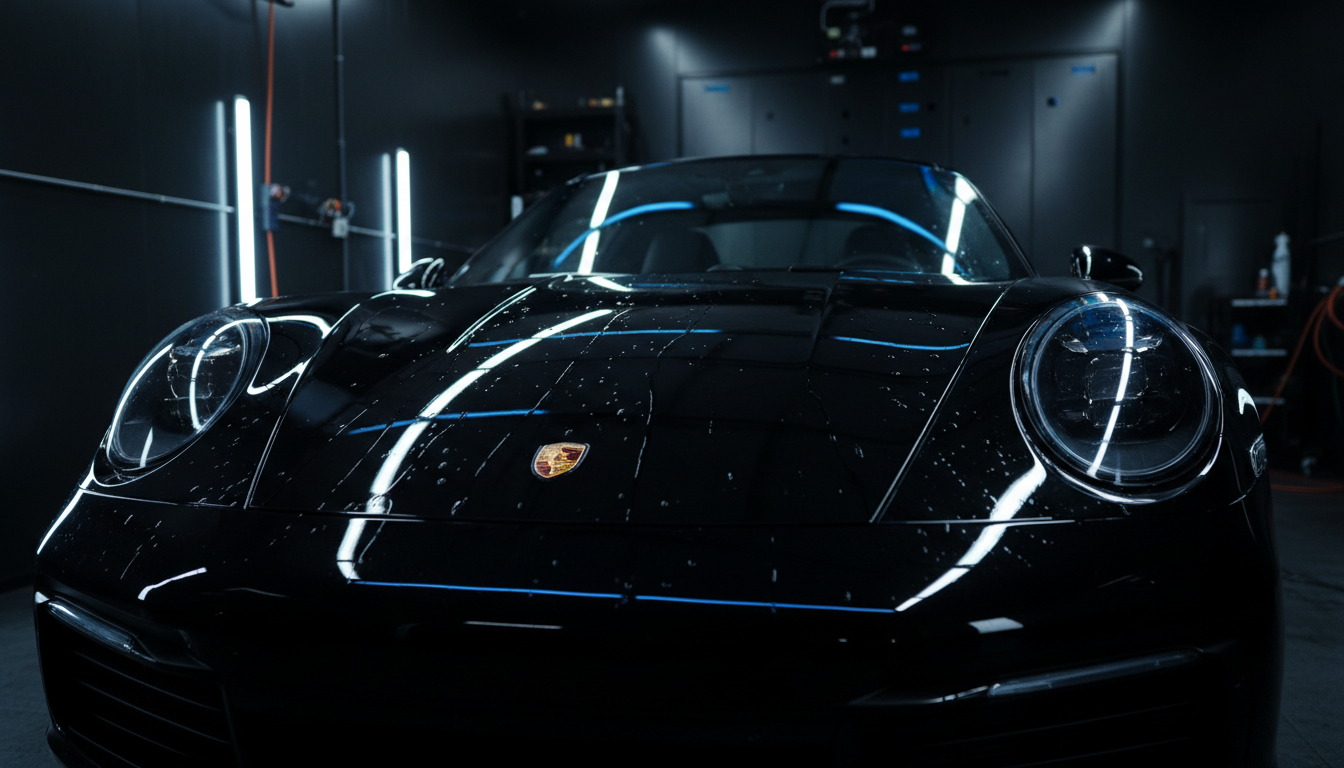
One of the most immediately noticeable results of ceramic coating is the transformation in paint appearance. The coating fills microscopic surface irregularities and creates a flatter, more reflective plane that produces a depth of gloss most vehicles never achieve from the factory. Paint that looked ordinary before coating often appears completely transformed after — richer, deeper, and more saturated in color. In San Diego's strong sunlight, the effect is striking.
Long-Term Paint Protection
A professionally applied ceramic coating provides durable, chemical-bonded protection that lasts years rather than weeks. Unlike wax — which sits on top of the clear coat and degrades with every wash and UV exposure — ceramic coating becomes part of the surface itself. It won't wash away, evaporate in the heat, or wear down from normal washing. For San Diego vehicles exposed to year-round sun and coastal conditions, this durability is a genuine advantage.
Easier Vehicle Maintenance
The hydrophobic properties of ceramic coating don't just make the vehicle look good — they make it dramatically easier to keep clean. Water, mud, and loose contaminants slide off the surface rather than adhering to it. Road grime that would normally require scrubbing on bare paint often rinses away with a simple rinse on a ceramic-coated vehicle. Most owners report spending significantly less time washing their vehicle after coating.
UV and Oxidation Protection
Paint oxidation — the chalky, dull degradation caused by prolonged UV exposure — is one of the most common paint issues on San Diego vehicles. Ceramic coating's UV-blocking properties substantially slow this process, keeping paint looking vibrant and fresh for years longer than untreated vehicles in the same environment.
Increased Resale Value
A vehicle with well-preserved paint commands measurably higher resale values than one showing oxidation, swirl marks, and surface contamination. Ceramic coating's long-term protection helps maintain paint condition over the ownership period, which pays dividends when it's time to sell or trade in the vehicle.
Chemical and Environmental Protection
Bird droppings, tree sap, industrial fallout, road salt, and harsh cleaning chemicals all present threats to bare or wax-protected paint. Ceramic coating's chemical resistance provides a meaningful buffer against these contaminants — reducing the risk of permanent etching if they're not removed immediately, and making them easier to remove safely when they are addressed promptly.
Want to protect your vehicle's paint in San Diego? Get a free ceramic coating consultation from SD Auto Style.
What Ceramic Coating Does NOT Do
This is where honest advice matters most. Ceramic coating is a genuinely excellent product — but it's been oversold by some in the industry to a degree that sets unrealistic expectations. Here's what ceramic coating will not do:
Make Your Vehicle Scratch-Proof
Ceramic coating adds hardness and light scratch resistance, but it will not stop keys, shopping carts, or sharp debris from scratching the surface. It helps against fine swirl marks from washing, not physical impact damage. For scratch protection, Paint Protection Film is the correct solution.
Stop Rock Chips
Rock chips and road debris impacts require physical impact absorption — which ceramic coating cannot provide. Only PPF's flexible, multi-layer construction can absorb and self-heal these impacts. Ceramic coating applied over PPF is a popular combination for this reason.
Eliminate Washing
Ceramic coating reduces washing frequency and makes each wash faster and easier — but it does not eliminate the need to wash your vehicle. Contamination still accumulates, and regular washing remains necessary to maintain both appearance and coating performance.
Prevent All Water Spots
Hydrophobic properties minimize water contact time, but mineral deposits from hard water can still etch a ceramic surface if left to dry in the sun repeatedly. San Diego's hard water makes proper drying habits important even on coated vehicles.
Last Forever Without Maintenance
Ceramic coatings are durable — not permanent. They benefit from periodic maintenance washes with pH-neutral products, and occasional application of a ceramic booster spray can extend the coating's performance. Neglect accelerates wear.
Ceramic Coating vs. Paint Protection Film (PPF)
This is the comparison that matters most for San Diego drivers serious about vehicle protection. Ceramic coating and PPF are fundamentally different products designed to solve different problems — and understanding the distinction is key to choosing the right protection strategy.
| Feature | Ceramic Coating | PPF |
|---|---|---|
| Rock chip protection | ✗ | ✓✓ |
| Self-healing technology | ✗ | ✓ (TPU films) |
| Scratch resistance | Light (swirl marks) | Heavy (deep scratches) |
| Gloss enhancement | ✓✓ | ✓ (gloss PPF) |
| Hydrophobic properties | ✓✓ | Moderate |
| UV protection | ✓✓ | ✓ |
| Coverage area | Full vehicle | High-impact zones |
| Lifespan | 3–7 years | 7–10+ years |
| Visibility | Invisible | Nearly invisible |
The Best of Both Worlds
Many high-end vehicle owners in San Diego choose a combined approach: PPF on high-impact zones — hood, front bumper, fenders, mirrors, and rocker panels — for physical chip and scratch protection, with ceramic coating applied over the entire vehicle (including over the PPF) for unified hydrophobic protection, gloss enhancement, and easier maintenance. This combination delivers comprehensive protection from both physical damage and environmental degradation.
Learn About Paint Protection FilmHow Long Does Ceramic Coating Last?
Consumer / DIY Grade
1–2 years
Lower SiO₂ concentration, easier to apply, shorter bond life
Entry Professional Grade
3–4 years
Applied by certified installers, better surface prep, stronger bond
Premium Professional Grade
5–7+ years
High SiO₂ content, multi-layer application, manufacturer warranty
In San Diego's climate, UV intensity and heat are the two most significant factors that affect coating longevity. Vehicles parked outdoors in full sun daily experience accelerated coating degradation compared to garage-kept vehicles. Regular maintenance washes with pH-neutral products, periodic use of a ceramic booster spray, and annual inspections by a professional applicator all extend useful coating life.
The coating grade matters enormously. A premium professional-grade coating installed with thorough paint preparation will significantly outlast a consumer product applied over inadequately decontaminated paint — regardless of brand claims.
What Affects Ceramic Coating Pricing?
Ceramic coating prices in San Diego vary widely, and understanding what drives that variation helps you evaluate quotes accurately.
Vehicle Size
A compact sedan requires significantly less coating material and labor than a full-size SUV or pickup truck. Larger surface area means higher material costs and longer installation time.
Paint Condition
Paint that is already clean and contamination-free requires less preparation. Vehicles with heavy water spots, industrial fallout, or oxidation need additional decontamination steps that add to the overall cost.
Paint Correction Requirements
This is the largest pricing variable for many vehicles. Swirl marks, fine scratches, and surface defects must be removed by machine polishing before coating — otherwise those defects are permanently sealed beneath the coating. A single-stage paint correction adds 2–4 hours of labor; a full multi-stage correction can add significantly more.
Coating Grade Selected
Premium professional-grade coatings with higher SiO₂ concentrations, manufacturer warranties, and multi-layer application protocols cost more than entry-level products — but provide meaningfully better durability and performance.
Installer Experience and Certification
Certified applicators who have completed formal training programs and maintain quality standards charge more than general detailers applying ceramic products without proper preparation protocols. The difference in results — and in coating longevity — is substantial.
Why Professional Installation Matters
Ceramic coating is one of the few automotive products where installation quality is arguably more important than the product itself. A premium coating applied over contaminated, poorly prepared paint will fail prematurely. A mid-grade coating applied by an experienced installer with proper preparation will consistently outperform a high-grade product applied carelessly.
Professional installation at SD Auto Style follows a rigorous preparation sequence: a thorough wash to remove surface dirt, chemical decontamination to remove bonded iron particles and industrial fallout, clay bar treatment to lift embedded contamination, paint correction to remove swirl marks and surface defects if needed, a final isopropyl alcohol wipe-down to remove any remaining oils or residue, and only then — application of the ceramic coating in a controlled, dust-free environment.
Each step matters. Skip the decontamination and the coating bonds over contamination. Skip the paint correction and you seal defects permanently beneath a coating that amplifies every imperfection. Skip the final wipe-down and adhesion suffers from day one.
Manufacturer warranties on professional coatings are also typically tied to certified installer application — meaning an improperly installed coating may void the product's warranty entirely. Always ask about installer certification and what preparation steps are included in the quoted price.
Common Ceramic Coating Myths — Debunked
Myth: Ceramic coating makes a car scratch-proof
Reality: Ceramic coating improves scratch resistance against light surface marring and fine swirl marks, but it will not stop physical scratches from sharp objects or impacts. No current coating technology eliminates scratch risk from significant contact.
Myth: You never have to wash your car again
Reality: False. Ceramic coating makes washing faster and easier, and reduces how often you need to wash — but environmental contamination still accumulates. Regular washing remains essential to maintain the coating's performance and appearance.
Myth: Ceramic coating lasts forever
Reality: Ceramic coatings are highly durable but not permanent. They degrade over time due to UV exposure, physical wear, and chemical contact. Professional-grade coatings last 5–7 years with good maintenance — not indefinitely.
Myth: Ceramic coating replaces PPF
Reality: Ceramic coating and PPF solve different problems. Ceramic provides gloss, hydrophobic protection, and UV resistance. PPF provides physical impact protection from chips and deep scratches. Neither replaces the other — many serious vehicle owners use both.
Myth: Any detailer can apply ceramic coating properly
Reality: Ceramic coating application requires specific preparation protocols, controlled application conditions, and product-specific technique. An inexperienced installer who skips preparation steps can leave a coating that fails early, looks uneven, or develops high spots that require professional correction to remove.
Is Ceramic Coating Right for Your Vehicle?
For most San Diego drivers who care about their vehicle's appearance and want long-term paint protection with minimal ongoing effort, ceramic coating is one of the best investments available. The combination of enhanced gloss, UV protection, hydrophobic properties, and multi-year durability makes it a genuinely superior alternative to repeated waxing.
Go in with clear expectations: ceramic coating is an upgrade to your paint's protection and appearance — not an armored shell. It works best on paint that is already in good condition or has been properly corrected, applied by a trained installer using quality products and preparation protocols.
If physical chip and scratch protection is also a priority — especially on a new or high-value vehicle — consider combining PPF on high-impact zones with a full-vehicle ceramic coating. That pairing delivers the most comprehensive protection currently available for street-driven vehicles in San Diego's demanding climate.
Ready to Protect Your Paint in San Diego?
SD Auto Style provides professional ceramic coating services in San Diego for all vehicle types — from daily drivers to exotic and luxury vehicles. Every coating includes thorough paint preparation for maximum performance and longevity.
367 15th St, San Diego, CA 92101 · (619) 354-0464
Ceramic Coating FAQs
Answers to the most common questions about ceramic coating in San Diego.